New! DIY Project Planner. Plan smarter, skip the spreadsheets. Start Your Free Trial Today →

Smart DIY & Home Improvement Tips
Smart DIY & Home Improvement Tips
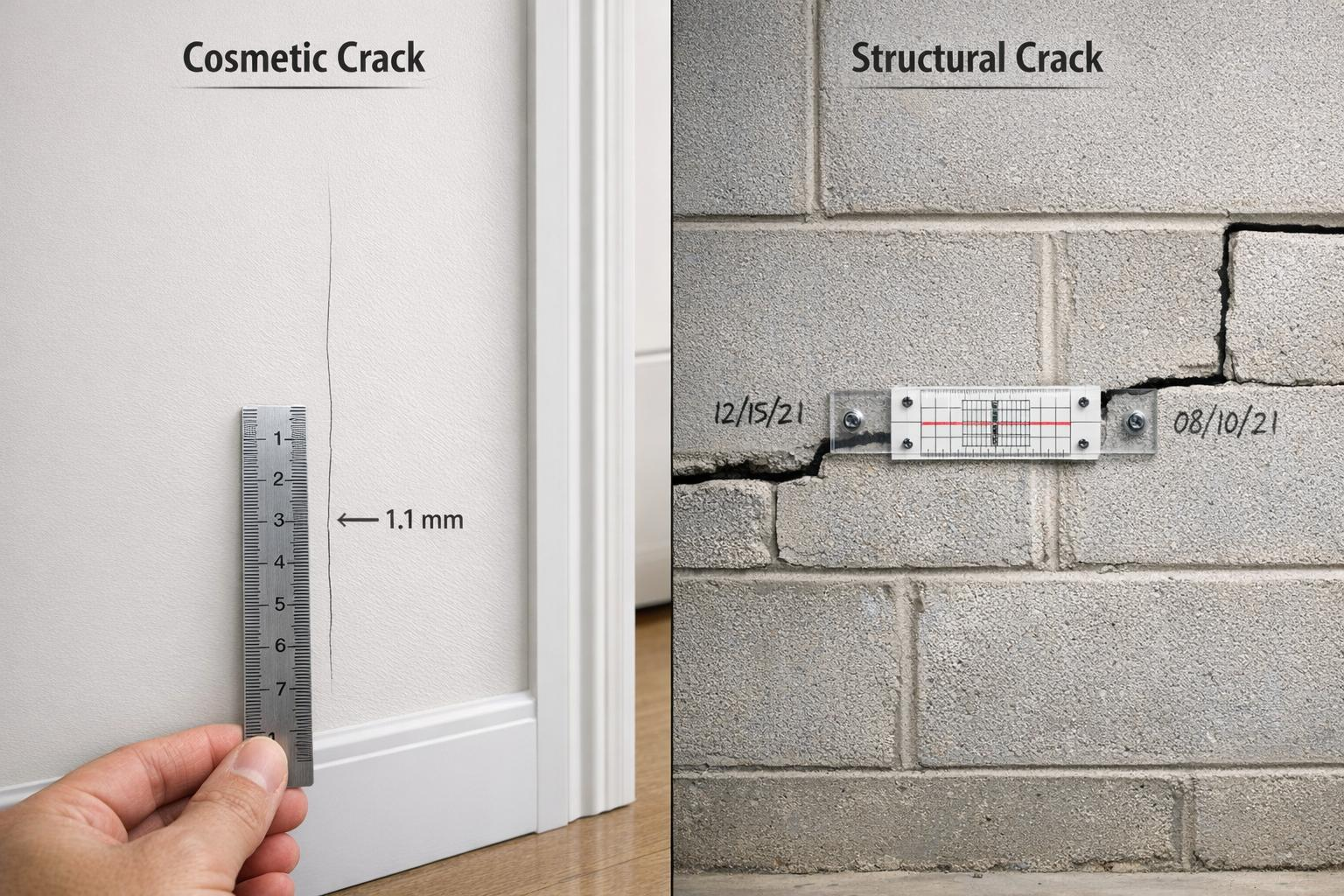
Thin hairline cracks are often cosmetic; horizontal, stair-step or widening cracks may be structural—measure, monitor, and call an engineer if they grow.
When it comes to wall cracks, not all are the same. Some are minor and only affect appearance, while others signal serious foundation or structural issues. Here’s how to tell the difference:
Takeaway: Cosmetic cracks are easy to monitor and repair, but structural cracks can lead to costly damage if ignored. Measure, track changes, and call a structural engineer if cracks grow or show concerning patterns. Early action can save money and ensure your home’s safety.
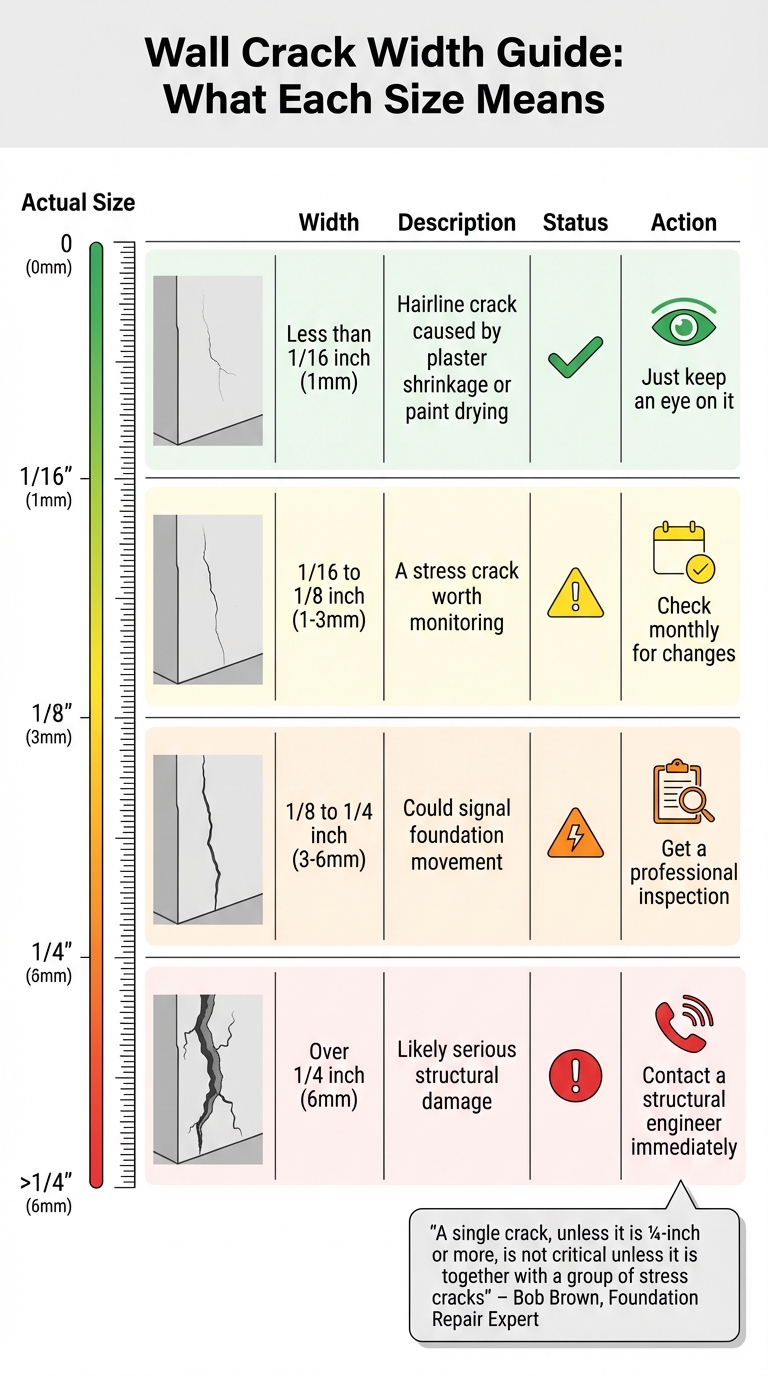
Wall Crack Width Guide: When to Worry and Take Action
Checking wall cracks doesn’t require fancy tools – just some basic ones and attention to detail. Focus on three main aspects: width, direction, and location.
You can measure crack width using simple items like a tape measure or even coins. For example, if a crack is about the width of a nickel’s edge or two stacked credit cards, it’s likely over 1/8 inch (around 3mm), which means it’s time to call a professional.
Here’s a quick breakdown of crack widths and what they typically mean:
| Crack Width | What It Means | Action Needed |
|---|---|---|
| Less than 1/16 inch (1mm) | Hairline crack caused by plaster shrinkage or paint drying | Just keep an eye on it |
| 1/16 to 1/8 inch (1-3mm) | A stress crack worth monitoring | Check monthly for changes |
| 1/8 to 1/4 inch (3-6mm) | Could signal foundation movement | Get a professional inspection |
| Over 1/4 inch (6mm) | Likely serious structural damage | Contact a structural engineer immediately |
Foundation repair expert Bob Brown emphasizes that:
"a single crack, unless it is ¼-inch [wide] or more, is not critical unless it is together with a group of stress [cracks]"
For ongoing monitoring, engineers like Matt Jaglowitz from Exactus Engineering suggest marking the crack ends with a pencil and adding dates:
"Tracking is everything. We use pencil marks, sometimes simple crack gauges, and just revisit over a few weeks. You’d be surprised how often you see measurable change"
But width is only part of the story – direction can reveal even more.
The direction and pattern of a crack can help pinpoint its cause.
"A diagonal crack in the wall, which can be wider at the top and tighter at the bottom, is caused by the foundation settling. A crack that runs at a jagged 45-degree angle is almost always a shear crack"
These cracks often show up near door or window corners when the foundation shifts.
The location of the crack is just as important as its size and pattern.
The position of a crack can provide critical clues about its cause.
Cracks near doors and windows are common because these areas are natural weak points. When foundations shift, stress builds at these corners, leading to warped frames or torn drywall. If you notice cracks in these spots, check whether doors stick, windows won’t close properly, or gaps appear between frames and walls – these are signs of structural movement.
Cracks at the ceiling-wall intersection on upper floors may point to roof truss issues, like "truss uplift", where the ceiling pulls away from the wall. Similarly, gaps between baseboards and flooring or walls and ceilings often signal structural problems.
Exterior cracks, like those in foundation walls or brickwork, are generally more concerning than interior drywall cracks. Pay extra attention to cracks near load-bearing walls, support beams, or ceiling joints, as these areas endure more stress. Also, feel for dampness or check for white powdery stains (efflorescence) around cracks – these indicate water infiltration, which needs immediate attention no matter the crack’s size or pattern.
Most wall cracks are surface-level issues, often harmless, but understanding them can save you from unnecessary worry and expense.
Cosmetic cracks are typically hairline fractures, no wider than 1/16 inch (1 mm). They’re often spotted along drywall seams or near door and window corners. The defining feature? They don’t change over time – they stay the same width and length.
These cracks only affect surface materials like paint, plaster, or drywall tape, leaving the structure beneath untouched. You won’t notice any unevenness, bulging, or bowing around them. As foundation expert Bob Brown explains from his decades of experience:
"Most of the problems that I see are serviceability or cosmetic in nature".
Cosmetic cracks usually appear on their own, without other warning signs like sticky doors, uneven floors, or moisture problems. If a cosmetic crack is repaired and doesn’t return, it’s a good sign that it’s not linked to structural issues. However, if it reappears or worsens, it may indicate a more serious concern.
Now, let’s explore the common reasons behind these surface imperfections.
A common cause of cosmetic cracks is house settling, especially during the first two years after construction. This natural process creates minor stress on materials, leading to superficial cracks.
Material shrinkage is another factor. As moisture evaporates from new wood framing, the wood contracts, causing attached drywall to crack. Similarly, concrete and basement walls can develop hairline cracks as they cure and lose moisture. Even thick applications of drywall joint compound can crack, forming "spiderweb" patterns as it dries.
Seasonal changes also play a role. Temperature fluctuations cause materials to expand and contract, which is particularly noticeable in homes without consistent climate control, such as vacation properties. Installation mistakes, like insufficient joint compound under drywall tape, can lead to fine, straight cracks along seams.
For new homes, experts suggest waiting at least a year before repairing cracks. This allows the materials to stabilize, reducing the chance of patched cracks reappearing.
When it comes to cracks in your home, structural cracks are the ones you can’t afford to ignore. These cracks often point to serious problems that can undermine your home’s stability and lead to expensive repairs.
Size is a key indicator. Cracks wider than 1/4 inch are a red flag for structural issues. The direction of the crack also tells a story. Horizontal cracks in basement or foundation walls and stair-step cracks along brick mortar joints are major warning signs, as discussed earlier. Another type to watch for are diagonal, 45-degree cracks near door or window corners – these "shear cracks" often indicate shifts in the structure.
Recurring cracks are another clue. If you keep seeing the same cracks reappear, it’s a sign of unresolved structural problems. According to Matt Jaglowitz, misdiagnosing these cracks can lead to severe outcomes like collapse or water damage.
Look for accompanying symptoms. Structural cracks rarely show up alone. Be alert for doors or windows that suddenly stick, uneven or bouncy floors, bulging walls, or sagging ceilings. Water seepage or white, chalky stains (known as efflorescence) are also warning signs, as they suggest moisture is infiltrating and weakening the structure.
Spotting these signs early is critical because ignoring them can lead to serious consequences.
Once structural cracks are on your radar, brushing them off isn’t an option. Left unaddressed, these cracks can worsen quickly. Water can seep through them, leading to mold growth and further damage to building materials. If the foundation becomes unstable, the entire structure is at risk – and in extreme cases, this could result in collapse.
The financial impact can be steep. Foundation repairs can cost anywhere from $250 to $20,000, while fixing water damage might set you back $1,350 to $6,250. Matt Jaglowitz emphasizes the importance of acting early:
"Bringing in an engineer early can actually save you money – sometimes up to 20% on repair costs".
Delaying repairs can also create headaches when it’s time to sell. Home inspectors will flag structural issues, and temporary fixes that mask the problem could lead to insurance denials down the line. Beyond threatening your home’s safety, these cracks can hurt its market value and your peace of mind.
Once you’ve identified the type of crack, keeping an eye on it over time is key to addressing potential structural issues. Jumping into repairs too quickly isn’t always the best move – monitoring the crack for several weeks can help you figure out whether it’s just a cosmetic problem or something more serious that needs attention. This step can prevent minor cracks from turning into major structural headaches.
To monitor cracks effectively, document their progression weekly. Take dated photos, measure the crack’s width using a measuring tape or calipers, and mark its edges with a pencil. This will give you a clear picture of how – or if – the crack is changing. For a simple check, you can even use the "coin test" mentioned earlier.
For a more precise approach, crack-monitoring gauges can measure movements down to millimeters, both horizontally and vertically. Pay attention to seasonal variations; cracks that expand and contract with the seasons could point to foundation movement.
As Matt Jaglowitz, CEO of Exactus Engineering, explains:
"Change over time is the real giveaway".
If your records show rapid changes or significant widening, it’s time to call in a professional.
If monitoring reveals persistent or worsening damage, it’s essential to bring in an expert. Contact a structural engineer if the crack grows wider than 1/4 inch, expands quickly, or reappears after being repaired. Certain types of cracks – like horizontal ones in basement walls, stair-step patterns in brick, or diagonal cracks near doors and windows – are particularly concerning and require immediate evaluation. Other warning signs include sticking doors, sloping floors, or gaps forming between walls and ceilings, all of which could indicate serious structural movement.
Getting an engineer involved early can save you money in the long run. Jaglowitz notes that addressing issues promptly can cut repair costs by as much as 20%. For an unbiased assessment, consider hiring a forensic geotechnical engineer, as they don’t sell repair services and have no financial motivation to overstate the problem. Foundation repair expert Bob Brown offers this perspective:
"a single crack, unless it is ¼‑inch [wide] or more is not critical unless it is together with a group of stress [cracks]".
When it comes to cracks in your home, understanding the difference between cosmetic and structural ones is crucial. Factors like width, direction, location, and how cracks change over time help distinguish between the two. Why does this matter? Because even seemingly minor cracks can lead to serious structural issues if left unchecked. Cosmetic cracks are usually thin, vertical, and stable after a home settles. On the other hand, structural cracks often form in horizontal or stair-step patterns and can widen as foundation problems progress.
Structural cracks pose risks far beyond appearances. They can lead to foundation failure, water damage, and costly repairs, with expenses ranging from $2,200 to $8,100. The financial and safety stakes are high, as Higgins & Associates warns:
"Cracks that seem minor today could lead to major problems tomorrow".
Misjudging a structural crack as merely cosmetic could mean spending money on unnecessary repairs – or worse, ignoring an issue that escalates into a bigger problem.
Taking action early is key. Consulting a structural engineer as soon as warning signs appear can cut repair costs by up to 20%. Cracks wider than 1/4 inch, those that grow noticeably over weeks, or cracks accompanied by other symptoms like bowing walls should be evaluated immediately. For an unbiased opinion, consider hiring an independent forensic geotechnical engineer.
Regularly monitoring cracks and seeking expert advice when needed helps protect your home’s structural integrity. Keep track of any changes and address underlying causes like soil movement or water infiltration to prevent recurring issues. While not every crack signals disaster, ignoring the warning signs can be costly. A proactive approach ensures your home stays safe – and your wallet stays intact.
Small, cosmetic cracks – like hairline fractures caused by settling or seasonal shifts – can often be fixed with simple tools like filler and paint. But cracks that are wider, horizontal, or stair-step in pattern might point to more serious structural problems, like foundation movement. If a crack is larger than 1/8 inch, continues to grow, or is accompanied by issues like bowing walls or uneven floors, it’s best to have a structural engineer take a closer look to ensure everything is safe.
Monitoring a crack over several weeks can help determine its nature. If the crack grows longer or wider during this period, it could signal a structural problem that requires evaluation by a professional. However, cracks that stay the same size are often cosmetic and generally don’t pose any safety risks.
The fastest way to measure a crack without any special tools is by using a standard measuring tape or ruler. If a crack is wider than 1/8 inch (around 3 mm), it could indicate a more serious problem. Cracks exceeding 1/4 inch (about 6 mm) are often classified as critical. Measuring the width is a straightforward method to gauge the severity of a crack without needing advanced equipment.