New! DIY Project Planner. Plan smarter, skip the spreadsheets. Start Your Free Trial Today →

Smart DIY & Home Improvement Tips
Smart DIY & Home Improvement Tips
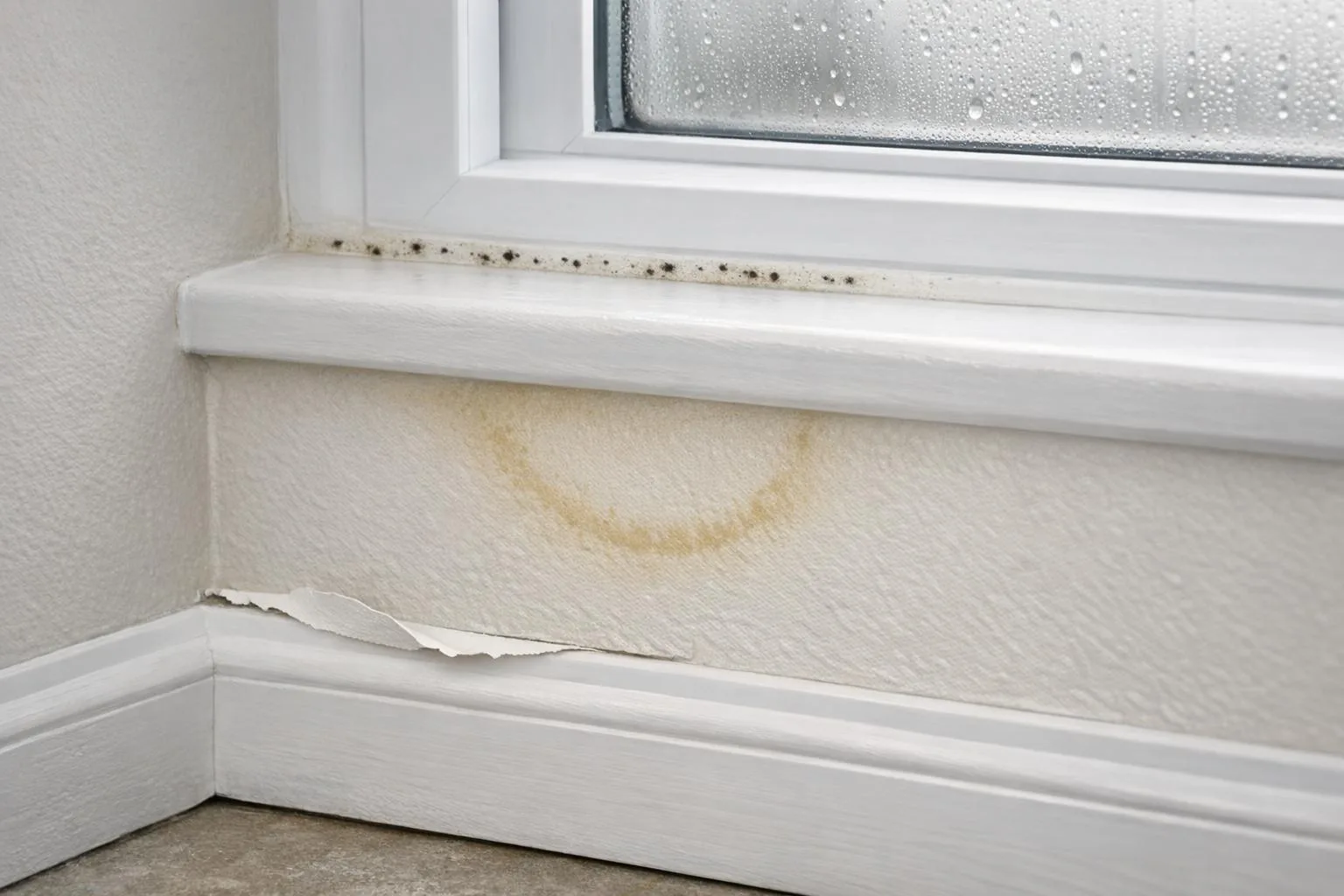
Seven early signs of mold at home: musty odors, dark stains, peeling paint, water marks, condensation, warped surfaces, and unexplained allergy symptoms.
Mold can cause expensive damage and health issues if ignored. It thrives in damp areas and can spread quickly, often unnoticed. Here are seven early signs to watch for:
Key Tip: Mold grows fast – within 24-48 hours on damp surfaces. Addressing these signs promptly can save you thousands in repair costs and protect your health.
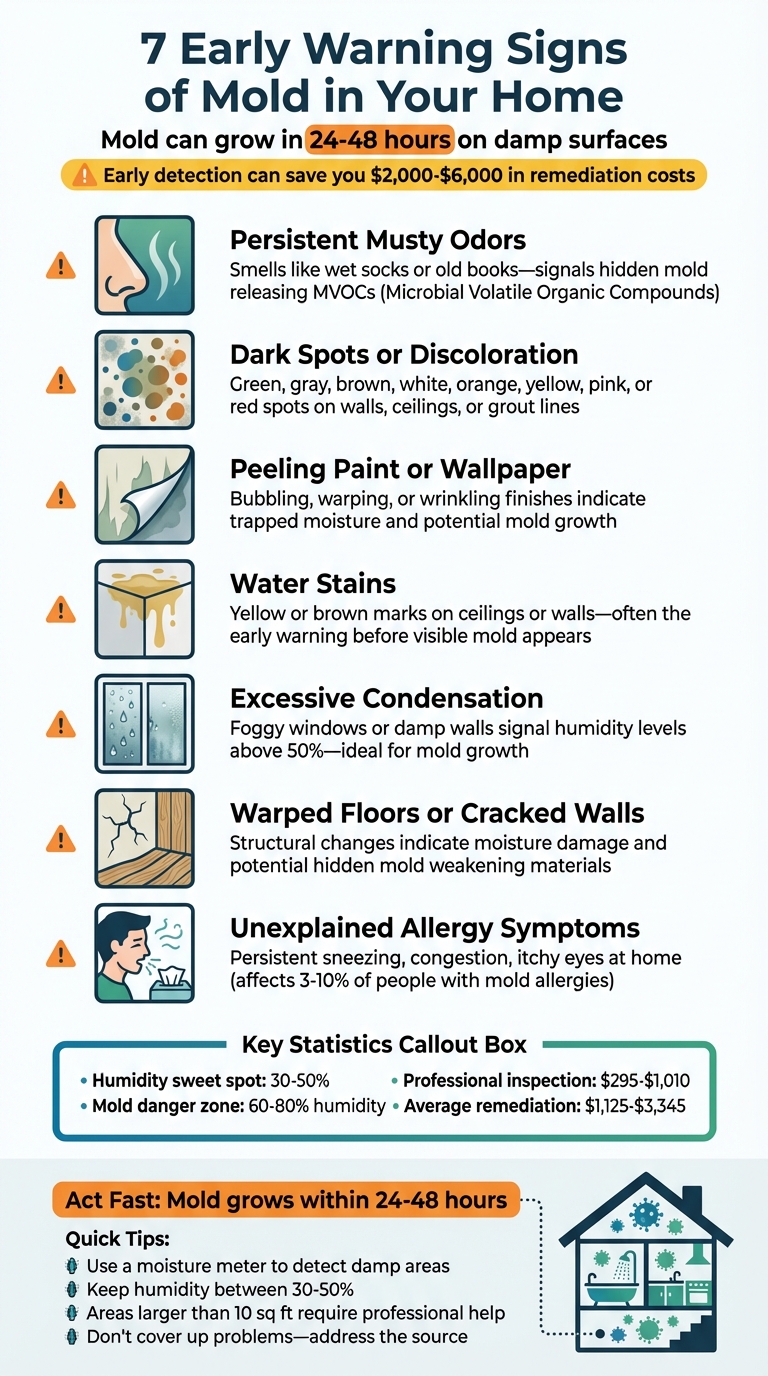
7 Early Warning Signs of Mold in Your Home
A lingering, musty smell often hints at hidden mold, even before you see any visible signs. This odor comes from Microbial Volatile Organic Compounds (MVOCs) – gaseous byproducts released as mold breaks down materials like wood, wallpaper, carpet, and adhesives. These compounds are airborne and can seep through drywall, door frames, and even electrical outlets, meaning the smell might point to mold hiding behind walls or under floors.
"This musty scent, reminiscent of old books or wet socks, signals the metabolic process of mold as it feeds on organic materials like wood, wallpaper, or carpet." – Bob Vila
Unlike temporary odors from damp laundry or dirty dishes, mold smells stick around and often intensify over time. If you notice this kind of smell without an obvious source, it could mean mold is growing out of sight. The smell’s strength may vary with changes in humidity, temperature, or airflow, but it won’t go away as long as the mold remains active.
To confirm the source of the odor, start with a thorough inspection. Check enclosed spaces like cabinets, closets, and access panels. If the smell gets worse when your HVAC system is running, take a closer look at the unit, including drip pans and filters. A moisture meter can also help identify damp areas in walls or floors. Avoid covering up the smell with air fresheners – this won’t solve the problem and might allow the mold to spread unnoticed.
Keep in mind that exposure to MVOCs can trigger symptoms like headaches, dizziness, nasal irritation, fatigue, and nausea. If you suspect mold, addressing it promptly is essential for both your health and your home.
After odors, visible signs like dark spots are often the next clue that mold is present. These spots may show up on walls, ceilings, or grout lines and are a clear indicator of mold growth. They typically form when moisture – whether from leaks, condensation, or high humidity – interacts with organic materials like drywall, wood, or carpet backing.
Mold can take on many appearances, showing up as faint stains, smudges, streaks, or speckled patterns. Its colors range widely, including green, gray, brown, white, orange, yellow, pink, or even red. The texture also varies: fresh mold often looks fuzzy or slimy, while older growth tends to appear powdery. However, don’t rely too much on color alone, as many mold types look similar. If spots reappear after cleaning, it’s a sign that the mold is still active.
"The first indication of mold might be dark or discolored specks and patches forming on what was once white or light-colored grout." – Bob Vila
Focus your inspection on areas where moisture builds up and airflow is poor. In bathrooms, check grout lines, caulking, and shower ceilings. In kitchens, look under sinks, around dishwashers, and behind refrigerators. Also, don’t forget window frames, the backs of furniture against exterior walls, and closet corners. Sometimes, water stains – yellow or brown rings – can indicate a leak. If these rings start turning green or black, mold is likely taking hold.
"If you see one spot of mold on the surface, there might be much more mold hidden out of sight." – CertainTeed
Keep in mind that visible discoloration is often just the tip of the iceberg. Mold colonies can grow behind wallpaper, beneath paint, or inside wall cavities. To reduce the chance of mold growth, aim to keep indoor humidity levels between 30% and 50%, as mold thrives when humidity hits 60% to 80%. If you come across mold patches larger than 10 square feet, it’s best to call in a licensed professional. Remediation costs typically range from $2,000 to $6,000.
Peeling, bubbling, or wrinkling paint and wallpaper can be a red flag for hidden mold. Moisture from leaks, condensation, or high humidity often gets trapped between the wall and its outer layer, weakening adhesives and creating the perfect conditions for mold growth.
"The first signs may be subtle bubbling, warping, wrinkling of the paint or wallpaper." – Bob Vila
Just like musty smells or discoloration, peeling finishes need immediate attention. Mold feeds on the organic backing of wallpaper and can weaken drywall, breaking it down over time. If the peeling area feels damp, there’s a strong chance mold is present.
Resist the urge to cover up the damage with fresh paint or wallpaper. Instead, remove a small section to check for mold underneath. If the affected area is larger than 10 square feet, consider hiring professionals for remediation, which typically costs around $2,254. For smaller areas, start by addressing the moisture problem, then replace any porous materials that have been contaminated. Once mold penetrates these materials, cleaning them effectively isn’t possible.
Keep indoor humidity levels in check to prevent future issues. Remember, mold can begin to grow in as little as 24 to 48 hours. This type of visible damage often accompanies other early mold warnings, making quick action critical.
Water stains are another telltale sign of hidden moisture problems, often showing up as yellow or brown discoloration on ceilings or walls. These stains usually result from issues like roof leaks, plumbing failures, HVAC problems, or condensation due to poor insulation.
"Water staining is often the early warning before visible mold." – RCR Environmental Team
When moisture lingers behind these stains, it means materials like drywall or wood have been damp for a while, creating the perfect setting for mold growth. If the stain continues to grow or feels damp to the touch, it’s crucial to address the source of the leak immediately. Signs like bubbling paint or soft drywall often indicate that mold is already weakening the structure.
It’s important not to simply cover up stains with paint without resolving the underlying issue. Tools like moisture meters can help pinpoint the source of moisture, and checking attic insulation may also reveal hidden problems. Keeping indoor humidity levels below 60% can help prevent further damage.
"Damp drywall is the ideal environment for mold growth. If you have a water stain on your ceiling, it’s best to get it repaired immediately." – Mr. Handyman
After fixing the leak, make sure the area is completely dried within 24 to 48 hours to stop mold from taking hold. If the damage is extensive – covering more than 10 square feet – or the source of the leak remains unclear, it’s wise to call in a professional. These stains serve as an early warning, emphasizing the importance of quick action when inspecting your home for mold.
Condensation isn’t just a nuisance – it’s often a sign of active indoor humidity issues that can lead to mold growth.
If you spot water droplets, foggy windows, or damp walls, it’s a red flag. This occurs when warm, moist air collides with cold surfaces like windowpanes or poorly insulated walls, creating the perfect setting for mold spores to thrive.
"Condensation, or dampness, represents more than enough of the moisture that mold needs to begin growing indoors." – Erich Amerine, Genesis Healthy Homes
Everyday activities like cooking, showering, and using the dishwasher add moisture to the air. In modern homes with tight insulation, this moisture often gets trapped. On the other hand, older homes with insufficient insulation tend to develop cold spots where condensation collects. Keep an eye out for moisture buildup in areas like window sills and grout lines, as these can be telltale signs.
To manage condensation effectively, aim to keep indoor humidity levels between 30% and 50%. A hygrometer, which costs around $10 to $50, can help you monitor this. Simple steps like running exhaust fans for 20 minutes after cooking or showering and leaving at least 2 inches of space between furniture and exterior walls can improve airflow and reduce moisture buildup. If you notice condensation, wipe it off immediately – mold can start forming on damp surfaces within 24 to 48 hours.
"If you see condensation or moisture collecting on windows, walls or pipes act quickly to dry the wet surface and reduce the moisture/water source." – U.S. Environmental Protection Agency
For areas with persistent humidity, additional measures may be necessary. Using a dehumidifier can help lower moisture levels, while insulating cold water pipes and improving wall insulation can prevent condensation from forming in the first place.
Structural changes in your home, like warped floors or cracked walls, can be a red flag for hidden mold problems. While surface stains and odors might be easier to spot, these physical changes often indicate deeper issues.
When moisture gets trapped beneath flooring or behind walls, materials like wood, laminate, and drywall start to absorb water and expand. The real trouble begins when mold sets in. Mold produces enzymes that attack cellulose, a primary component of wood and drywall, weakening these materials from the inside out. As the mold grows, its thread-like structures, called hyphae, dig into the material to feed, further compromising its strength and stability.
"Mold produces hyphae, which are thread-like root structures that penetrate and feed on the material. This can also cause the material to become weakened and eventually warp or crumble." – Erich Amerine, Genesis Healthy Homes
Signs of mold-related damage include spongy areas underfoot, or hardwood floors showing crowning (a raised center) or cupping (raised edges). On walls, look for cracks, bubbling paint, or softened areas that suggest internal deterioration.
One way to tell if mold is the culprit is through texture and smell. Wood affected by mold often becomes soft and crumbly, accompanied by a distinct musty odor. If warping occurs without that smell, the issue might stem from non-biological causes, like foundation settling.
If you suspect mold behind these structural changes, resist the urge to dig into walls or floors yourself. Disturbing moldy materials can release spores into the air, potentially worsening the problem. Instead, consider hiring a professional. Mold inspections generally cost between $300 and $1,014, while remediation expenses average $1,125 to $3,345.
For example, in March 2025, Vanessa T. from Lake Elsinore, CA, noticed bubbling paint in her laundry room. A professional inspection revealed mold caused by a failed supply line connection. The estimated cost for remediation? $4,200.
When you notice these structural warning signs, a professional mold inspection can help address the problem before it worsens.
Sometimes, your body might be the first to clue you in on hidden mold problems. If you’re dealing with persistent sneezing, congestion, or itchy eyes outside of typical allergy seasons, it might be more than just a fluke. Unlike seasonal allergies that follow predictable patterns, mold-related symptoms can pop up year-round and often intensify in specific areas of your home.
Mold tends to thrive in damp, hidden spots – think behind walls, under carpets, or in crawl spaces. These areas allow mold spores to build up, and your immune system sees them as invaders, triggering a histamine response similar to other allergens. Interestingly, symptoms may ease when you’re away from home, like at work or on vacation, only to reappear when you return.
"If symptoms flare in damp areas and improve after cleaning, mold is likely involved." – Mold Removal Lab
Unexplained allergy symptoms can be just as telling as visible signs like dark spots or peeling paint. Watch for respiratory issues such as wheezing, chest tightness, nasal congestion, and itchy or watery eyes. Other possible signs include headaches or fatigue. For those with asthma, hidden mold can even trigger sudden attacks seemingly out of nowhere.
Pay attention to patterns in your symptoms. If they seem worse in damp areas of your home or when the HVAC system is running, mold could be the culprit. To manage this, try keeping indoor humidity levels below 50% with a dehumidifier. If symptoms persist, it’s a good idea to consult a healthcare professional for allergy testing.
Mold allergies affect about 3% to 10% of people. If you suspect mold, a professional inspection can cost between $295 and $1,010. Spotting these symptoms early can help you address the issue before it worsens.
Spotting mold early can save you from hefty repair bills and health risks. Tackling small moisture problems now can prevent the need for expensive, large-scale remediation later. Professional mold removal can be pricey, and many homeowner insurance policies only cover up to $2,500 for mold-related issues. Acting quickly also helps preserve your home’s structure, avoiding warped wood and damaged drywall, while keeping your indoor air safe to breathe.
To catch mold in its early stages, use these simple steps: shine a flashlight parallel to surfaces (raking light) to spot fuzzy patches or paint bubbles, check damp areas like under sinks or along window sills, move furniture away from exterior walls to improve airflow, and monitor humidity with a digital hygrometer – aiming to keep levels between 30% and 50%. And don’t ignore your sense of smell – a musty odor can often signal hidden mold growth.
If mold lingers after cleaning, odors persist without visible signs, or it’s found on porous materials like drywall, it’s time to call in a professional. Additionally, after plumbing leaks or flooding, have the area inspected promptly. Delaying maintenance could lead to denied insurance claims later on.
Mold is a fungus that poses risks to both your health and your home. Mildew, a surface-level variation of mold, is generally less harmful and easier to address. While both belong to the same fungal family, mold tends to grow deeper, causing more damage, whereas mildew typically appears on damp surfaces like tiles or walls and is more superficial.
Whether you should tackle mold cleanup yourself or call in a professional largely depends on how extensive the problem is. For small, surface-level mold issues, DIY cleaning methods can often do the trick. But if you’re dealing with a larger infestation, persistent mold, or growth in hard-to-reach areas, it’s best to leave it to the professionals. They can ensure the mold is removed safely and thoroughly, minimizing any potential health risks.
Improving ventilation is the fastest way to lower indoor humidity. Exhaust fans in the kitchen and bathroom are particularly useful for quickly removing moist air. Dehumidifiers and air conditioners can also do the trick, especially in warm, humid regions. While opening windows might seem like a good idea, it’s not as effective when outdoor humidity levels are high. In such cases, mechanical ventilation offers a more reliable solution.