New! DIY Project Planner. Plan smarter, skip the spreadsheets. Start Your Free Trial Today →

Smart DIY & Home Improvement Tips
Smart DIY & Home Improvement Tips
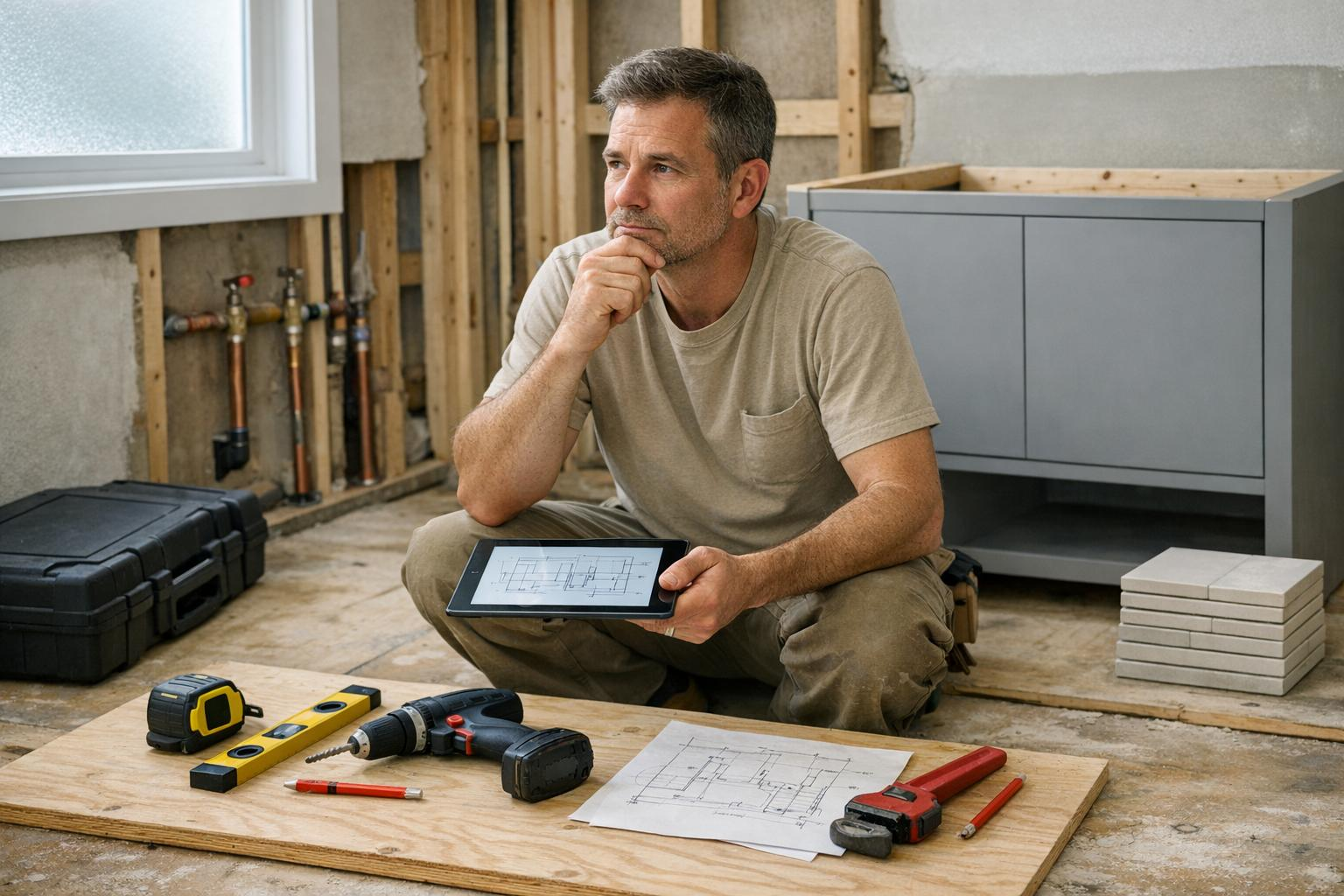
Advanced DIY projects fail when homeowners lack skills, planning, or the right tools—learn common causes, costs, and when to hire a pro.
Most advanced DIY projects fail because they require skills, tools, and experience that many homeowners lack. While saving money is the main motive for DIY, the reality is often different: over 30% of DIYers end up hiring professionals to fix or finish their work, costing an average of $862 more than planned.
The main reasons for failure include:
For high-risk tasks like structural repairs or electrical work, hiring professionals is safer and often cheaper in the long run. Start small, plan thoroughly, and know your limits to avoid costly mistakes.
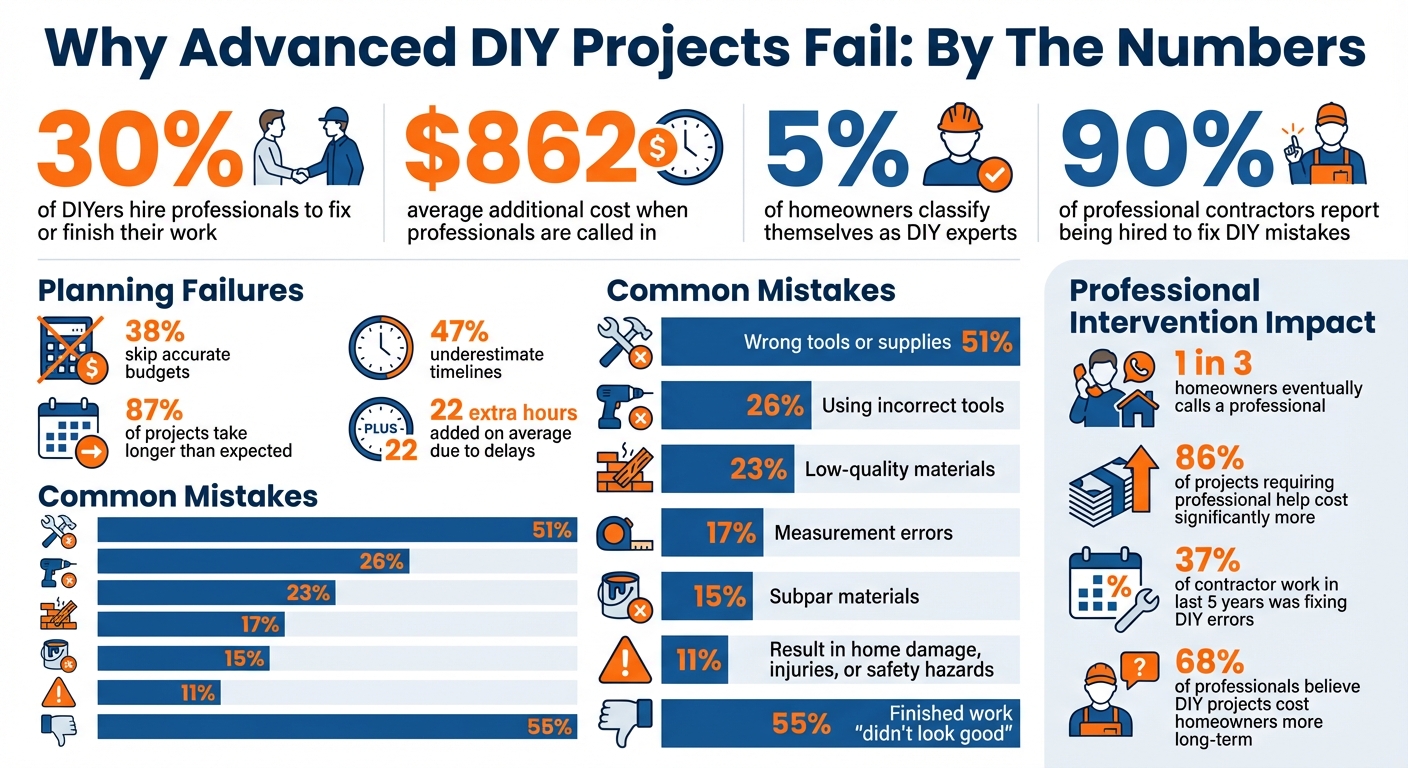
The True Cost of DIY Project Failures: Key Statistics and Common Mistakes
The gap between a homeowner’s confidence and their actual abilities can be where DIY projects start to unravel. While many people feel ready to take on advanced tasks, only 5% of homeowners classify themselves as DIY experts. As mentioned earlier, many DIY efforts eventually require professional help, often accompanied by regret. The financial impact is significant: homeowners spend an average of $862 to fix DIY mistakes, and when budgets are exceeded, the final cost can nearly double the original estimate. These challenges often stem from technical deficiencies, which we’ll dive into below.
One of the main reasons DIY projects fail is a lack of technical knowledge. Complex jobs – like electrical wiring, plumbing, and HVAC work – are consistently rated as the most challenging and error-prone. These aren’t skills you can pick up from a quick YouTube video; they demand specialized training that most homeowners lack. David Pekel, President and CEO of the National Association of the Remodeling Industry, explained:
Often, instructions are oversimplified and the job exceeds an ordinary homeowner’s training.
Beyond technical expertise, many DIYers struggle with tool usage and selection. Building an essential DIY starter kit can help mitigate these early hurdles. For instance, 26% of homeowners admit to using the wrong tools, while 17% report making measurement errors, both of which complicate projects further. Physical difficulty is another factor, with 50% of DIYers finding their projects harder than expected.
Unexpected challenges – like discovering outdated wiring, hidden wallpaper, or uneven flooring – can also derail DIYers, especially those without experience [14, 15]. The risks are clear: 11% of DIY projects result in home damage, injuries, or safety hazards, and 55% of homeowners admit their finished work simply "didn’t look good". These gaps in technical knowledge highlight the importance of experience in avoiding such pitfalls.
While technical skills are crucial, hands-on experience can make or break a project. Professionals often categorize DIYers into three groups: licensed experts, skilled nonprofessionals with a solid toolset, and beginners with minimal tools and experience. Experienced DIYers have the foresight to anticipate problems – like knowing to use waterproof backboards for tile installations or properly priming walls before applying wallpaper. Without this foresight, projects that initially seem fine may fail or deteriorate over time.
The numbers back this up: 90% of professional contractors report being hired to fix DIY mistakes, and 37% of their work in the last five years has been correcting such errors. Craig Russell, Founder and CEO of The English Contractor, shared an example of this:
a spaghetti-like mass of wiring left behind by a well-intentioned but ill-informed DIYer. Problem is, doing electrical work yourself can cause a fire or appliance damage.
Tonya Bruin, CEO of To Do-Done, emphasized the financial risks of inexperience:
If you don’t have the actual skills to finish the project you’re hoping for, it will cost you more money than hiring a professional.
Even seasoned DIY enthusiasts can stumble without a solid plan in place. Did you know that 38% of homeowners fail to create accurate budgets before diving into a project? On top of that, 47% underestimate how long their projects will actually take. When things spiral out of control, budget overruns can skyrocket to double the initial estimate [13, 20]. And delays? They add an average of 22 extra hours to the timeline [13, 20].
At the heart of these issues lies one major culprit: lack of research. Brittany, the creator of Our Home Made Easy, summed it up perfectly:
The quickest way to never finish a DIY project (or have it look less than professional) is to underestimate the amount of work it will take.
One of the biggest mistakes DIYers make is underestimating the scope of a project. It’s easy to miss steps like prep work, waiting for materials to cure, or following the correct sequence of tasks [15, 23]. Take a seemingly simple painting job, for instance. What starts as a straightforward task can balloon into a much bigger ordeal – like discovering wallpaper underneath that requires removing drywall and fixing the floors – leading to costs five times higher than expected.
Another major oversight? Skipping permits. Neglecting to secure permits for structural, electrical, or plumbing changes can come back to haunt you. It might even bring your project to a screeching halt. Emilie Sennebogen from HowStuffWorks put it bluntly:
If you don’t have a permit and you’re found out, they can shut your project down in mid-hammer.
Other common pitfalls include miscalculating dimensions or not having the right tools on hand. These small errors can snowball into larger problems that derail the entire project. It all underscores the importance of realistic planning, budgeting, and scheduling.
So, how do you avoid these planning missteps? It starts with crafting accurate budgets and timelines. Many DIYers underestimate costs because they fail to account for local price variations, tool rentals, or the need for extra materials [15, 23]. The stats don’t lie: 60% of projects go over budget, and 87% take longer than expected [16, 19]. Worse yet, 23% of homeowners who skipped permit planning ended up relying on a Home Equity Line of Credit (HELOC) to cover unexpected expenses.
Timelines are another tricky area. For most homeowners, DIY projects are weekend endeavors squeezed between full-time jobs and family obligations [15, 16]. Without dedicating full-time hours, even small projects can drag on. The solution? Build in buffer time and budget for the unexpected. Buy a little extra material (you can always return unused items) and leave room in your schedule for delays [15, 23].
For more practical tips on budgeting and timelines, check out Gold Team Home.
Careful planning is just the beginning. Managing resources and choosing the right tools play a huge role in whether your project succeeds or falls apart. Here’s a hard truth: 51% of DIY home improvement errors happen because people don’t have the right tools or supplies. Add in measurement mistakes and material miscalculations, and it’s clear why resource management often becomes a stumbling block for even the most ambitious DIYers.
Underestimating the materials and resources you’ll need is a common pitfall. Many DIYers rely on rough estimates or outdated plans, which can lead to major issues – especially with complex tasks like roofing or drywall installation. Labor is another area often overlooked. People tend to underestimate how much time a project really demands, especially when compared to a professional’s efficiency.
Then there are the unexpected "soft" costs – like permits – that can take a big bite out of your budget if you’re not prepared. As Ryan Beschner, Director of Consumer Finance at Power Home Remodeling, explains:
"It’s important to set a proper budget. You need to identify what is really needed on the job. And you have to understand how much those items actually cost before starting work".
Another common issue? Cutting corners with low-quality materials. 23% of DIY failures are linked to this mistake, while 15% result from using subpar materials. Sure, cheap supplies might seem like a money-saver at first, but they often lead to rework that costs much more in the long run. This highlights the importance of thorough planning and understanding the technical demands of your project.
Beyond materials, having the right tools can make or break your timeline and budget.
Just like misjudging material needs, using the wrong tools can seriously impact your project. For instance, using a claw hammer instead of a rubber mallet on drywall can leave dents. Digging fence post holes with a manual digger instead of a power auger? That might leave you with a wobbly fence. Even drilling into brick becomes nearly impossible if you’re using a standard 12-volt drill instead of a hammer drill.
Missing tools can also lead to costly delays. On average, extra trips to the hardware store set projects back by three weeks and add $862 to the budget.
To avoid these headaches, start by auditing your toolbox against a detailed list of what your project requires. For expensive or rarely used tools like power augers or industrial sanders, renting from a home improvement store is often a smarter move than buying or improvising with less effective hand tools. If you’re unfamiliar with a tool, practice on scrap material first to get the hang of it.
For professional-level advice on tool selection and project planning, Gold Team Home offers practical tips that can help you make confident, informed decisions.
Learning from past mistakes is key to improving DIY outcomes. Common issues include inaccurate measurements, skipping essential steps, and pushing forward without reassessing when unexpected challenges arise. These missteps can lead to even bigger headaches – and expenses – down the line.
Here’s an eye-opener: 1 in 3 homeowners eventually calls a professional to fix or finish a DIY project. Why? Failures often come down to technical mistakes like measuring incorrectly, damaging parts during installation, or not protecting surfaces properly. Poor planning adds to the problem, with projects taking an average of 22 hours longer than anticipated.
The financial toll is no small matter either. A whopping 86% of DIY projects that require professional intervention end up costing significantly more than expected – on average, an extra $862.
The cost to have a job done right once is often less than having the lowest bid done over again several times.
- Professional Service Person, Angi
The lesson here? Be honest about your skills and plan realistically before diving in. A little preparation can save you a lot of time, money, and frustration.
If you want better results, take a more structured approach to your DIY efforts. Start by dedicating at least six hours to research. Watch multiple tutorials, read step-by-step guides, and jot down key notes before buying tools or materials. Use the "Time, Talent, Tools" framework to evaluate whether you have enough time, the necessary skills, and the right equipment for the job.
Begin with smaller, lower-risk projects, like painting a room or planting a garden, before tackling more complex tasks like installing flooring or making structural changes. If you’re using unfamiliar tools, practice on scrap material first. This helps you build confidence and improve accuracy. Also, create a detailed budget with a healthy contingency fund – projects that go over budget can end up costing twice as much as you planned.
For step-by-step advice based on real-world experience, Gold Team Home offers DIY pro tips and tutorials that guide you through proper project planning and execution.
Even with careful planning and growing skills, some projects are better left to the pros. Tasks like electrical work, HVAC installation, roofing, and foundation repairs are not only complex but also come with serious safety risks. High-voltage electricity, structural changes, or working at dangerous heights are situations where professional expertise is non-negotiable.
With each project you are thinking of attempting, figure out what could likely go wrong and the resulting cost/damage. If that number is more than you are willing to pay, hire someone instead.
- Nicole Harris Bocianski, Staff Writer, Angi
Even for projects you feel confident attempting, consulting expert resources early can help you avoid costly errors. If building permits or strict local codes are involved, professional input ensures your work is both legal and safe. Keep in mind that 68% of professionals believe poorly executed DIY projects end up costing homeowners more in the long run.
Tackling advanced DIY projects often presents challenges due to common missteps like inadequate skills, poor planning, or resource shortages. Studies reveal that many homeowners struggle with these projects – about one in three eventually hires a professional to finish or fix the work.
The financial impact can be steep. Homeowners who bring in professional help after a failed DIY attempt spend an average of $862 more than planned. On top of that, 86% of these projects end up costing far more than anticipated, and 11% lead to issues like property damage, injuries, or safety risks.
Achieving success starts with an honest evaluation of your abilities and thorough preparation. Before diving into any complex project, take the time to assess whether you have the required skills, tools, and time. Do your research, practice on spare materials, and create a detailed budget with extra funds for unexpected expenses. For high-risk tasks – like those involving electrical systems, gas lines, HVAC, or structural changes – it’s critical to hire a professional to ensure your safety and protect your home.
The goal isn’t to discourage DIY but to approach it wisely. Start small to build your confidence and skills, plan carefully, and know when it’s better to call in an expert. Gold Team Home provides step-by-step guidance grounded in real-world construction experience, helping you tackle projects confidently while avoiding the costly mistakes many homeowners face.
Before diving into a DIY project, take a moment to evaluate your skills, experience, and the complexity of the task. Certain projects – like those involving electrical systems, plumbing, structural modifications, or potential safety risks – often demand professional expertise. If you don’t have the proper tools, knowledge, or confidence to handle the job safely and correctly, it’s usually wiser to bring in a professional. This can help you avoid expensive errors and ensure everyone’s safety.
When putting together a DIY budget, make sure to account for permits, materials, unexpected expenses, and a contingency fund for any surprises that might come up. These costs can add up quickly, so it’s better to be prepared than caught off guard.
For your timeline, start by clearly defining the project’s scope. Take time to plan every detail, factor in the time needed for permits and inspections, and include a buffer for possible delays. This extra time can be a lifesaver when things don’t go as planned.
Thoughtful planning not only keeps your spending in check but also helps you stick to realistic deadlines.
Renting makes sense when dealing with large, pricey, or specialized tools that you’ll only need for a single project. Think of equipment like sanders, plate compactors, or premium German sanders. It’s a smart way to cut costs, avoid cluttering your storage, and still get the exact tools you need to get the job done right.