New! DIY Project Planner. Plan smarter, skip the spreadsheets. Start Your Free Trial Today →

Smart DIY & Home Improvement Tips
Smart DIY & Home Improvement Tips
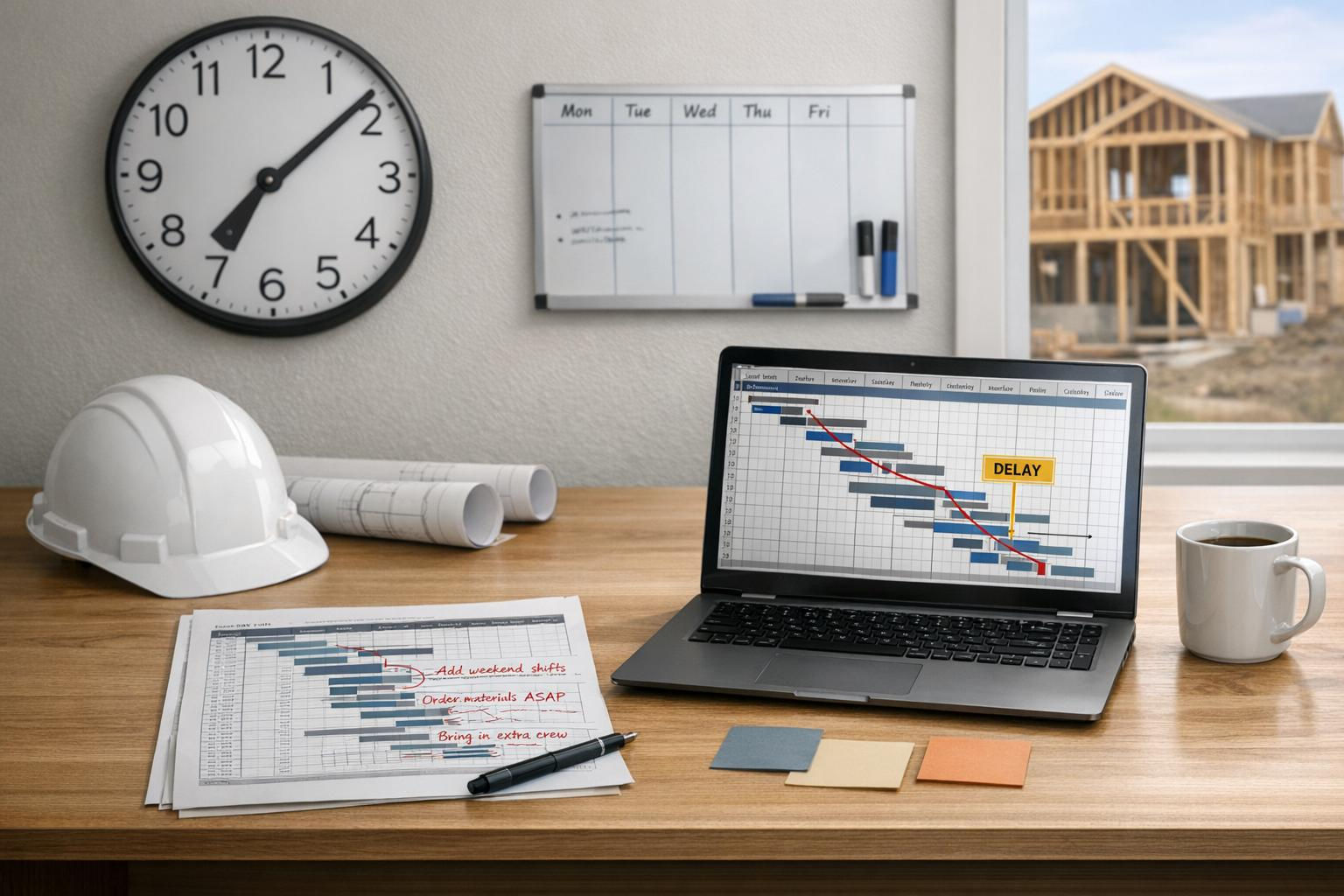
Learn common causes of construction delays, how to measure schedule and cost impacts, and tools (CPM, re‑baselining, digital scheduling) to recover.
98% of construction projects in North America finish late. Delays can stretch timelines by 37% and increase costs by up to 20%. Whether caused by poor planning, supply chain issues, labor shortages, or weather, delays impact both your schedule and budget. For instance, a $100,000 project can see unexpected costs of $2,000 to $20,000.
The good news? You can minimize delays by addressing common causes upfront, like scheduling gaps, material shortages, or communication breakdowns. Here’s how to spot potential problems, measure their impact, and take action to stay on track. Plus, learn how tools like the Critical Path Method (CPM) and centralized scheduling can help prevent future setbacks.
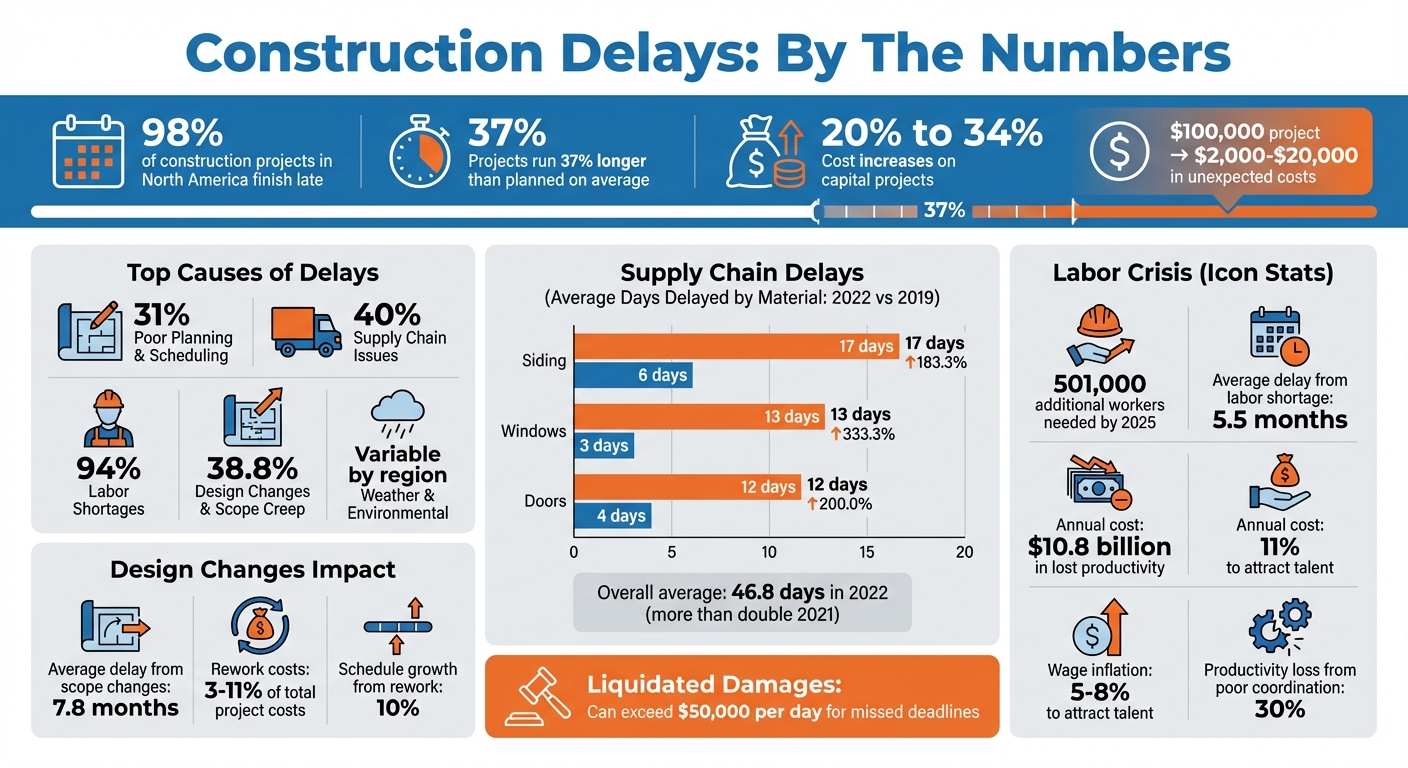
Construction Delay Statistics: Causes, Costs, and Impact on Project Timelines
Effective delay management starts with preparation, which is why you need a project planner for every renovation.
Keeping a project on schedule is no small feat. The average construction project runs 37% longer than initially planned. These delays often aren’t the result of one glaring issue but rather a series of smaller setbacks across planning, materials, labor, weather, and communication. Let’s dive into how these factors combine to throw projects off track.
Weak planning is a major culprit behind delays. Schedules often miss critical details like site access limitations, realistic timelines, or necessary inspections and permits. When planning happens in isolation – without input from field teams – site-specific challenges can easily be overlooked.
Another common misstep? Ignoring task dependencies. If schedules don’t clearly outline which tasks need to be completed first, crews may show up before the site is ready. This can lead to "trade stacking", where multiple teams work in cramped spaces, drastically reducing productivity. Add to that the failure to allocate enough time for RFIs (Requests for Information), inspections, and permits, and delays are almost inevitable.
"Construction delays rarely come from one big, obvious mistake. More often, they build quietly through small breakdowns that repeat across planning, communication, approvals, and documentation." – SuperConstruct
Disjointed tools like spreadsheets and emails further complicate things, creating information silos and version control headaches. It’s no surprise that the construction management software market is expected to grow from $10 billion to $21 billion by 2030 as companies move away from manual coordination.
History offers some cautionary tales. The Melamchi Drinking Water Supply Project in Nepal started in 2000 with a 2007 target completion date. Frequent design changes and slow approvals pushed the project to finish in 2021 – 14 years late. Similarly, Berlin Brandenburg Airport opened in 2020, nine years behind schedule, after missing at least six major deadlines due to poor planning and constant scope changes.
Supply chain challenges are another leading cause of delays, affecting nearly 40% of projects. Unlike manufacturing, construction supply chains are fragmented and project-specific, leaving them vulnerable to timing issues across multiple supplier levels.
Long lead items like electrical switchgear, HVAC units, and façade systems need extra attention. Delays in these areas can add months to a project. For example, mechanical air handler units that once took 6–12 weeks to arrive now require 4–6 months. In 2022, supply chain issues delayed projects by an average of 46.8 days, more than double the delay seen in 2021.
Hidden risks often lurk at lower supplier tiers. Tier-2 or tier-3 suppliers – who aren’t directly monitored – can cause delays that surface late in the process. Even when materials arrive on-site, missing components or unresolved RFIs can lead to an "installable backlog".
| Material | Average Days Delayed | % Increase Since 2019 |
|---|---|---|
| Siding | 17 | 183.3% |
| Windows | 13 | 333.3% |
| Doors | 12 | 200.0% |
Source:
Alturas Homes in Boise, Idaho, offers a success story. By implementing a centralized scheduling system, they scaled from building 5 homes annually to over 780 homes in just 11 years. This system helped them navigate supply chain disruptions and ensure materials arrived on time.
Labor shortages are a persistent issue, with 94% of contractors struggling to fill open positions. The industry needs an additional 501,000 workers by 2025 to meet demand. An aging workforce, coupled with younger generations avoiding physically demanding trade careers, is exacerbating the problem.
Labor shortages lead to delays in over half of projects, with an average extension of 5.5 months. These gaps cost the industry $10.8 billion annually in lost productivity and overruns. To attract talent, companies face wage inflation of 5–8% as they compete for skilled workers.
"73% of construction leaders consider team experience ‘very significant’ in creating successful project outcomes." – Bridgit’s 2025 State of Workforce Planning
Even when crews are available, overstretched teams and poor coordination can reduce productivity by up to 30%. Disconnected systems for schedules, RFIs, and documentation slow decision-making, while rework – caused by unskilled labor or poor planning – adds 3–11% to total project costs and contributes nearly 10% to schedule growth.
Rosedale Roofing in Maryland overcame these challenges, achieving 300% growth over a decade. Their success stemmed from adopting digital planning tools that allowed real-time schedule adjustments, ensuring profitability even as they tripled in size.
Weather is an unpredictable but inevitable challenge. Rain can delay concrete pours, extreme heat affects both worker safety and material curing, and winter conditions often halt exterior work. Natural disasters or site-specific challenges can also bring progress to a standstill.
To manage these risks, contractors should incorporate buffer time into schedules based on regional weather patterns. For instance, Northeastern U.S. contractors must account for winter slowdowns, while those on the Gulf Coast should plan around hurricane season. Prefabrication and modular construction methods are gaining popularity as they allow work to continue off-site, minimizing weather-related disruptions.
Design changes and poor communication are notorious for derailing timelines. Scope changes impact 38.8% of global projects, adding an average of 7.8 months to schedules. These changes often require rework, new materials, and adjustments to trade sequencing, all of which strain both time and budget. Without a proper change management process, these issues can spiral into "scope creep."
Communication breakdowns compound the problem. When teams rely on separate tools – like spreadsheets, emails, and whiteboards – information often gets lost or delayed. Unanswered RFIs, delayed submittals, and outdated drawings can leave field crews scrambling.
"A good schedule should arrange all project activities in a logical, sequential order, providing all involved team members with a roadmap of how the construction project should be run from start to finish." – Paolo Kukhnavets, Marketing Content Writer, GanttPRO
Implementing a formal change management protocol with documented schedule reviews and digital approval processes can help keep these challenges under control. This ensures that every adjustment is tracked and accounted for, minimizing disruptions.
When a delay occurs, it’s essential to evaluate its overall effect on your timeline and budget. This allows you to pinpoint the most effective solutions.
Start by determining whether the delay is critical – affecting the project’s overall completion or major milestones – or non-critical, impacting tasks with built-in buffer time. This distinction helps prioritize your response.
Next, categorize the delay’s cause. Excusable delays are beyond anyone’s control, such as extreme weather or owner-requested changes. On the other hand, non-excusable delays often result from contractor-related issues like poor workmanship or late material deliveries. Some excusable delays may also be compensable, meaning they could entitle you to additional time, money, or both.
Be on the lookout for concurrent delays, where multiple issues overlap. If both you and your contractor contributed to delays during the same period, resolving responsibility can become more complex.
"The most important thing is setting and communicating realistic expectations regarding the project schedule." – Alex Benarroche, Legal Counsel, Levelset
Keep a detailed daily log of delay events, noting dates, durations, and responsible parties. This documentation is invaluable for negotiations or claims later on. This analysis sets the stage for addressing financial and scheduling impacts.
Delays often lead to unexpected costs. Beyond missing the deadline, you might face extended field office overhead, idle labor expenses, equipment rental extensions, material storage fees, and even price increases for late material orders.
Document all additional costs, such as idle labor and extended equipment rentals. Many contracts also include liquidated damages – predefined daily penalties (sometimes exceeding $50,000 per day) for missed deadlines.
Regularly update your schedule with the most current data. Using an outdated baseline can result in inaccurate conclusions and make it harder to justify additional claims. A clear paper trail connecting delays to specific financial impacts is crucial.
The Critical Path Method (CPM) is a key tool for assessing delay impacts. It highlights the longest sequence of tasks that must stay on schedule to avoid delaying the entire project. If a delay affects a task on the critical path, the project timeline will shift.
Depending on your project’s complexity, these methods can help analyze delays:
| Method | When to Use It | Function |
|---|---|---|
| As-Planned vs. As-Built | For simpler, shorter projects | Compares the original plan to actual progress to identify variances |
| Time Impact Analysis (TIA) | For complex projects needing forward-looking analysis | Uses "fragnets" (mini-schedules) to project how specific delays affect the timeline |
| Windows Analysis | For long-term projects | Breaks the timeline into 1–6 month periods for manageable analysis |
| Collapsed As-Built | For legal claims or blame resolution | Removes delays from the timeline to show what would have happened without them |
For mid-project delays, a fragnet can be particularly useful. By isolating new activities and integrating them into your current schedule, you can assess how completion dates shift. This approach provides precise data to guide your next steps instead of relying on rough guesses.
Delays can throw a wrench into even the most carefully planned projects. Once you understand the impact of a delay, it’s time to take action. Here are some strategies to recover lost time while keeping quality intact and costs under control.
One way to address delays is by "crashing" the schedule – essentially throwing more resources at tasks on the critical path. This could mean adding extra crews, approving overtime, or renting additional equipment. But be cautious: extended overtime can lead to a 30–40% drop in productivity over a 10-week period.
"When project sponsors don’t want to extend the end date, one alternative is crashing [or compressing] the schedule. Crashing can help you get back on track, but you must consider the availability and cost of resources."
- Aayush Sharma, Business Systems Analyst, Ciber
Another approach is fast-tracking, which overlaps tasks that were originally planned to happen sequentially. For example, you might start interior framing before finishing foundation work. While this can save time, it also increases the risk of rework if earlier tasks change.
To manage unforeseen delays, it’s common to reserve 5–10% of the project timeline as buffer time. Distributing this buffer throughout the schedule – rather than saving it all for the end – can help absorb minor setbacks more effectively. If sticking to the original timeline isn’t realistic, consider re-baselining. This involves creating a new schedule that reflects current progress and provides a more accurate forecast for completion.
Now, let’s look at how to make the most of your available resources.
When delays occur, it’s crucial to focus your resources on the critical path – the tasks that directly affect the project’s completion date. Shift workers from non-essential areas to bottlenecks. For instance, if bad weather halts exterior work, crews can be reassigned to indoor tasks like drywall installation, electrical rough-ins, or plumbing. Using digital project management tools can make it easier to visualize assignments in real time and adjust quickly.
Timeboxing is another useful technique. By focusing on "must-have" tasks, you ensure that the most critical components are completed on time, even if some less important features are postponed.
"It is better to have a working system with limited functionality than waiting for more time to have a complete system."
- Gopal Sahai, Senior Manager, Strategic Development, MSSL
However, avoid overstaffing the site. Overcrowding can lead to supervision issues, equipment shortages, and logistical headaches, ultimately slowing progress.
Clear communication is the glue that holds recovery efforts together. Schedule weekly updates to review budgets and milestones, along with daily huddles to address immediate challenges. If an issue arises, notify the relevant parties right away and follow up with a written recovery plan.
Centralize all project documentation – such as plans, change orders, and meeting notes – into one digital platform so everyone has access to the latest information. Tools like Gantt charts or on-site whiteboards can help pinpoint delays and guide corrective actions. Additionally, implementing a "look-ahead" schedule – a detailed two-week rolling plan that breaks down milestones into daily tasks – ensures everyone stays aligned on short-term priorities.
The smartest way to deal with delays? Stop them before they even happen. Once you’ve tackled a setback, use what you’ve learned to set up systems that can handle surprises and keep things running smoothly.
When choosing partners, prioritize reliability over low bids. Before signing on a contractor, dig into their financial stability and track record. Ask past clients specifically about their ability to meet deadlines – not just the quality of their work.
"A slightly higher bid from a reliable, communicative partner is almost always the better financial decision over the life of the project."
Get key subcontractors involved early in the planning phase. They can flag potential issues, identify materials with long lead times, and suggest better ways to sequence tasks.
Make sure every detail is documented. Lay out clear roles, responsibilities, payment terms, and project specifications upfront. Track performance using metrics like productivity, safety, and quality. You can even offer bonuses for hitting milestones early or reducing material waste – these incentives can boost overall performance.
Strong partnerships are essential, but pairing them with modern technology can add another layer of protection against delays.
Digital tools give you real-time insights into your project. Cloud-based platforms can centralize schedules, ensuring everyone works off the same, up-to-date version. Research shows that poor planning causes 31% of construction delays, and projects often run 20% longer than expected.
Start by creating a baseline schedule in your digital platform and regularly compare it to actual progress. Use mobile tools for daily logs to track weather, crew sizes, and equipment availability – this creates a detailed record you can refer back to. Automating procurement tracking is another game changer. By including material lead times in your master schedule, you can set up alerts to avoid last-minute surprises.
Combining dependable partnerships with digital tracking tools and thorough reviews of past projects strengthens your ability to prevent delays.
Post-project reviews are invaluable. Compare your planned timeline with what actually happened to identify which phases or trades caused the biggest slowdowns. Whether the issue was poor planning, staffing shortages, weather, or permits, pinpointing the root cause helps you refine your approach moving forward.
"The worst schedules are created by one person in an office. The best schedules are built with input from the people who will do the work."
- CrewConsole
Involve your field teams in these reviews and develop a "what-if playbook" for common risks like failed inspections or bad weather. Set firm deadlines for client decisions on items like fixtures and appliances to keep procurement on track. Keep detailed records – daily reports, photos, and email confirmations – to build a reliable history that will guide future projects.
Finally, pay close attention to the critical path – the sequence of tasks that directly impacts your project’s completion date. Delays here have the most significant effect on the overall schedule.
To minimize construction delays, a combination of clear planning and proactive steps is essential. Delays are rarely caused by a single mistake; they often stem from small lapses in planning, communication, or documentation that gradually escalate into larger issues. Statistics reveal that most projects in North America run behind schedule, with delays increasing capital costs by 22% to 34% on average, alongside significant daily financial consequences.
Early detection is key. Pay attention to red flags like increasing RFI backlogs, high crew turnover, or missed smaller milestones before they disrupt the critical path. When delays do occur, classify them immediately – this helps determine the appropriate legal and financial response. Additionally, thorough documentation of delays is crucial for any claims or disputes.
Effective recovery requires realistic adjustments to the project schedule. Instead of attempting to compress the original timeline, which can lead to worker burnout and compromised quality, re-baseline the schedule with achievable goals. It’s also important to notify the project owner in writing as soon as a delay arises to safeguard contractual rights, even if the full extent of the delay isn’t yet clear.
Leverage digital tools to gain real-time insights and address the planning errors responsible for 31% of delays. Finally, conduct a closeout analysis at the end of each project to identify lessons learned and improve future processes.
To figure out if a delay is part of the critical path, see if it affects the sequence of tasks that directly dictate when the project will be completed. A delay on the critical path will shift the project’s finish date since it impacts dependent tasks that don’t have any slack time. Review the schedule’s task dependencies and available float to determine if the delay cuts into or eliminates float on key activities.
To demonstrate a construction delay, it’s crucial to keep detailed and organized records. This includes maintaining project schedules that track disruptions, the effects of delays, and associated activities. Save all correspondence, reports, and logs that document the timing, causes, and consequences of delays. These records play a key role in supporting legal or contractual claims and are invaluable when resolving disputes. With proper documentation, you’ll be better equipped to back up your delay claims.
When major shifts impact the original project plan – like changes in scope, unforeseen delays, or new constraints – it’s essential to re-baseline the project schedule. This process ensures the schedule aligns with the current situation, making it easier to provide accurate forecasts and keep stakeholders informed. Re-baselining becomes especially critical when delays render the original baseline ineffective for tracking progress or managing the project efficiently.